
Florida is famous for sugar-sand beaches, neon sunsets, and a seriously fun bar scene. But behind every great drink special is a web of rules that bars and restaurants have to follow.
If you love catching a deal on cocktails, it’s worth knowing the basics of how Florida regulates happy hour.
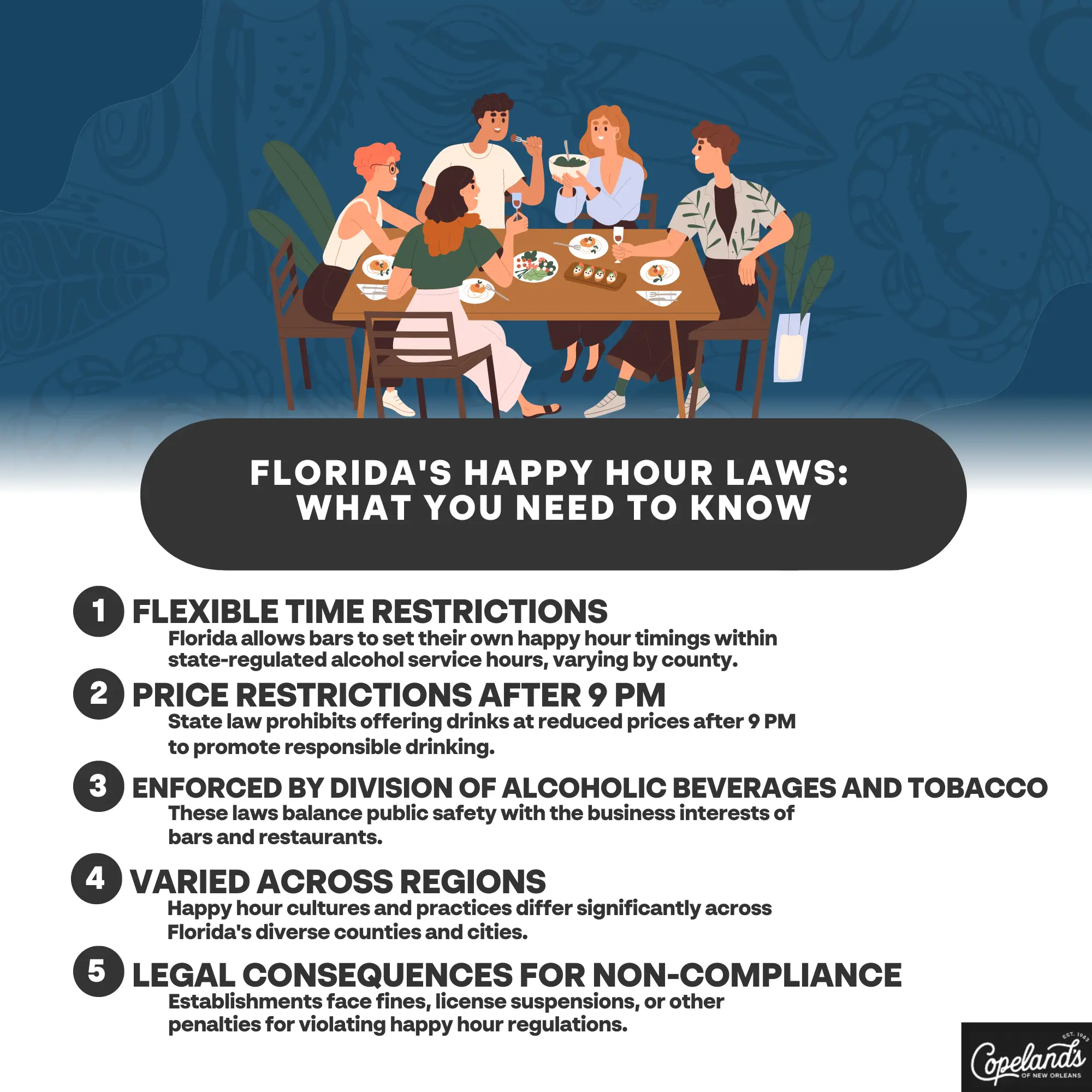
These rules are set and enforced by the state’s Division of Alcoholic Beverages and Tobacco. They’re designed to balance two big goals: helping hospitality businesses thrive and encouraging responsible alcohol consumption.If you’re curious how that ties into broader bar policies Florida venues must follow, it all connects back to state regulations on when and how alcohol can be sold.
Understanding Florida’s Happy Hour Laws
At a high level, Florida’s happy hour framework focuses on:
- Who can serve alcohol and when
- How discounts and promotions are advertised
- What types of drink specials are allowed or restricted
Bars and restaurants must have the right license, follow local hours of sale, and run promotions in ways that don’t encourage clearly unsafe drinking behavior (like “drink as much as you can” deals).
These rules aren’t meant to kill the fun—they’re there to create a safer environment for both guests and businesses.
Time Restrictions in Florida Happy Hours
Florida does not have a single, statewide “happy hour window,” but:
- Local governments can set hours of alcohol service, and
- Your favorite bar’s happy hour must fit inside those hours
That’s why some cities or counties allow late-night specials, while others end alcohol service earlier. In practice, this means:
- Many spots run happy hour in the late afternoon to early evening
- Some may add a late-night happy hour, as long as it’s still within local legal hours
Because rules can differ by county or city, two bars just a short drive apart might follow slightly different schedules.
Price Rules and Drink Discounts
Florida allows drink discounts, but puts limits on how they’re offered and advertised. Bars generally must avoid promotions that:
- Encourage rapid overconsumption (like “all-you-can-drink” for one flat price)
- Are misleading or unclear about what’s included and for how long
Many places structure their deals as simple, time-limited discounts—like half-off select cocktails or classic 2 for 1 cocktails that apply to specific drinks during a clearly advertised time frame.
The key idea: deals are fine, as long as they’re transparent, time-bound, and don’t push guests toward unsafe drinking behavior.
Historical Context of Florida’s Happy Hour Rules
Happy hour rules didn’t appear out of nowhere. Over the years, legislators and regulators have:
- Responded to concerns about drunk driving and public safety
- Adjusted laws to keep up with changing bar culture
- Tried to protect businesses from unfair competition or predatory promotions
The result is what you see today: Florida allows happy hour (unlike a few states that restrict it heavily), but shapes the way it’s done to encourage moderation.
Florida vs. Other States
Every state has its own take on happy hour:
- Some states ban certain types of specials outright
- Others limit how big a discount can be
- A few restrict promotions to food-only discounts
Florida lands somewhere in the middle:
- It permits drink discounts,
- Lets venues choose their time windows (within legal hours),
- Also, focuses on preventing the most risky, “anything goes” style promotions.
So if you move here from elsewhere, don’t be surprised if your new local rules look a little different from what you’re used to.
Impact on Businesses and Consumers
For bars and restaurants, happy hour is more than fun—it’s strategy. The laws shape how they:
- Design menus and promotions
- Choose happy hour times
- Market themselves to locals and visitors
If you’re searching for happy hour that Jacksonville locals genuinely love, you’ll notice that many spots emphasize a mix of fair pricing, good food, and a relaxed vibe rather than extreme drink challenges.
That’s partly smart hospitality; and partly the influence of state rules.
For guests, this usually means:
- Clear, published specials
- Set time windows for discounts
- A predictable, consistent experience from one visit to the next
Responsibly Enjoying Happy Hours in Florida
Knowing the law is one thing; knowing your own limits is another. A few ways to keep happy hour actually happy:
- Pace yourself – Alternate alcoholic drinks with water or soft drinks
- Eat while you drink – Food slows absorption and helps you feel better
- Plan your ride – Rideshare, a designated driver, or walking distance are your best friends
- Know your limits – Stop before it stops being fun
Responsibility isn’t just a legal topic; it’s how you protect your health, your wallet, and your night.
Exploring Florida’s Happy Hour Scene
From rooftop lounges in Miami to neighborhood bars in Jacksonville, Florida’s happy hour culture reflects its diversity:
- Coastal towns lean into waterfront views and seafood
- College areas skew toward casual, budget-friendly specials
- Business districts emphasize after-work cocktails and small plates
In Jacksonville, it’s easy to pair drink specials with great food—think Cajun bites, seafood, and Southern comfort in one place.
That’s exactly the kind of experience you’ll find with happy hour Jacksonville options that focus on both flavor and value (you’ll only use that anchor once, so you can keep it where it best fits your flow; if you’ve already used it above, don’t repeat it here).
Legal Implications for Non-Compliance
For businesses, ignoring happy hour laws isn’t worth the risk. Violations can lead to:
- Fines and financial penalties
- Warnings or probation
- Suspension or loss of a liquor license
Because a liquor license is often central to a bar or restaurant’s business model, most venues take compliance extremely seriously—training staff, updating menus, and adjusting promotions as needed.
FAQ
What is the 1/2/3 rule for drinking?
The “1/2/3 rule” is a simple self-check some people use to keep their alcohol intake in a safer range:
- 1 – No more than one drink per hour
- 2 – No more than two drinks per occasion
- 3 – No more than three drinks per day
It’s not an official medical guideline, but it’s a handy reminder to slow down and give your body time to process alcohol.
Remember that “one drink” usually means a standard drink (like a 12 oz beer, 5 oz of wine, or a shot of 80-proof spirits), and factors like body size, medications, and health conditions can change what’s safe for you.
When in doubt, err on the side of less and drink plenty of water.
The Bottom Line on Florida’s Happy Hour Laws
Florida’s happy hour landscape is built on balance:
- Fun, flexible drink specials for guests
- Clear guardrails that encourage safe service and responsible drinking
When you understand the basics of the law, it’s easier to appreciate why bars structure their specials the way they do, and to enjoy the experience with confidence. Those same rules also shape how special occasions work, from casual after-work drinks to events that feature personalized touches like signature wedding cocktails crafted to fit your theme and your venue’s legal requirements.
If you’re in Jacksonville and want to turn that knowledge into a great night out, Copeland’s of New Orleans is ready with bold flavors and a warm, Southern welcome.
Pair your favorite Cajun and Creole dishes with carefully curated drink specials and soak in the atmosphere.
Join us for happy hour.


