
Serving drinks may seem simple at first glance, but doing it well is an art—one that elevates the overall dining experience and reflects genuine hospitality.
Whether you’re hosting a gathering at home or working in a professional environment, mastering drink service can make every beverage feel more thoughtful, polished, and enjoyable.
Great drink service involves more than just pouring a beverage. It includes presentation, temperature, timing, and attention to detail. These small elements can transform a routine moment into something memorable. If you’ve ever enjoyed a beautifully prepared drink at a restaurant in Jacksonville, you know how much the right service enhances flavor and atmosphere.
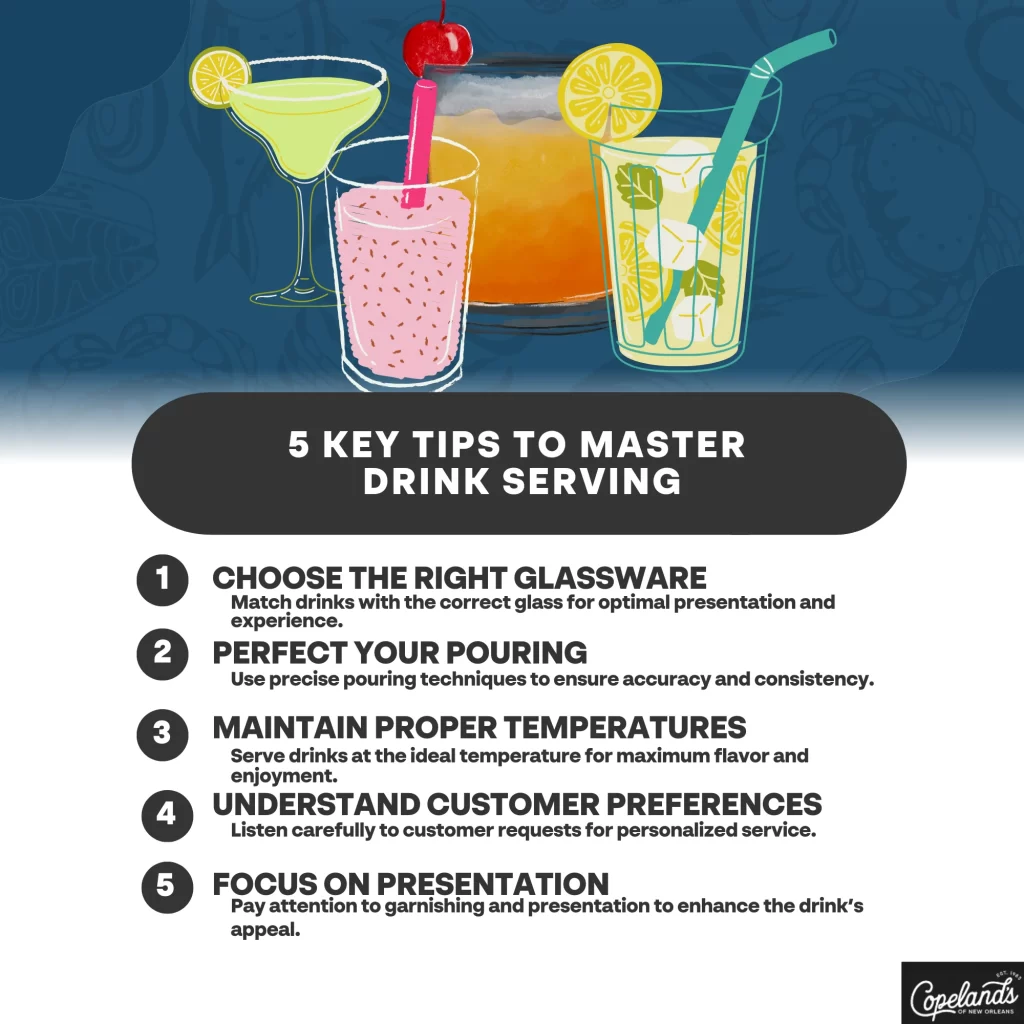
Below, you’ll find five essential tips that help ensure drinks are served with care, creativity, and professionalism.
Choose The Right Glassware
Glassware sets the tone for a drink. Its shape, size, and material all influence aroma, flavor, temperature, and the overall experience. Choosing the right glass shows intention and instantly elevates even the simplest beverages.
Different styles of drinks benefit from different glasses:
• Wine glasses enhance aroma and direct flavor to specific parts of the palate.
• Highball glasses are ideal for tall, refreshing beverages with plenty of ice.
• Lowball glasses work well for cocktails that emphasize aroma or use large-format ice.
• Martini and coupe glasses add elegance to spirit-forward drinks.
• Mugs and heat-safe vessels preserve warmth for hot beverages.
A drink feels more special when it interacts with the right vessel. Glassware also affects the sensory experience—thin rims feel different from thick rims, and clear glass highlights colorful ingredients or layered elements.
In restaurants, thoughtful glass selection is standard practice, but it’s just as effective at home. Pairing the right glass with the right beverage is one of the simplest ways to express creativity and care.
For inspiration, browsing the Menu offers a closer look at how restaurants pair beverages with dishes in a way that enhances both.
Perfect Your Pouring
Pouring may seem routine, but technique matters. The way a drink is poured influences carbonation, aroma, consistency, and presentation. A well-executed pour shows skill and ensures that the drink reaches the guest exactly as intended.
Some key pouring techniques include:
• Tilting the glass when pouring beer to control foam and preserve carbonation.
• Pouring wine gently to avoid excessive aeration and splashing.
• Layering liqueurs slowly over the back of a spoon to create striking visual effects.
• Pouring cocktails evenly to maintain balance when serving multiple drinks at once.
Good pouring also requires temperature awareness. Glassware should be clean, dry, and—when appropriate—pre-chilled. This prevents dilution and keeps drinks tasting their best.
Practicing pouring techniques helps build confidence and consistency. Over time, pouring becomes a seamless motion, enhancing efficiency and presentation. Even at home, a smooth pour makes drinks feel more polished and professional.
Maintain Proper Temperatures
Temperature is one of the most important factors in drink service. A cold drink that isn’t cold enough quickly loses its refreshing quality, while a warm beverage served too hot can overwhelm delicate flavors or create discomfort. Maintaining proper temperatures shows attention to detail and respect for the craft.
For cold beverages:
• Chill glasses before serving.
• Use slow-melting ice to avoid watering down drinks. • Store mixers and juices in the refrigerator until needed.
For warm beverages:
• Preheat mugs or cups to maintain warmth.
• Avoid boiling liquids that should be served gently warmed.
• Add spices or flavorings at the correct stage to maximize aroma.
Temperature control also applies to storage. Wines, beers, and cocktails each have ideal serving temperatures that enhance flavor. Professional servers understand these differences, but even home hosts benefit from following the same principles.
Restaurants throughout Jacksonville, FL take temperature management seriously because they know it directly affects enjoyment. With a little practice, anyone can achieve that same level of consistency.
Understand Customer Preferences
The best drink service starts with understanding personal preferences. Every guest brings a unique taste profile—some prefer bold and citrusy drinks, while others enjoy softer, sweeter, or more aromatic options. Learning what people enjoy helps you craft beverages that feel custom-made and thoughtful.
You can understand preferences by:
• Asking simple questions about flavor or sweetness levels.
• Noting common choices and patterns.
• Offering small suggestions without overwhelming the guest.
• Providing alternatives for dietary or ingredient restrictions.
Creativity blossoms when you tailor drinks to the preferences of the person you’re serving. A guest who prefers subtle sweetness might appreciate a lightly flavored spritzer, while someone who enjoys strong aromatics might enjoy a spirit-forward cocktail with herbal notes.
These thoughtful touches create lasting impressions. The same approach is often seen in restaurants that build menus designed around guest experiences—like the variety offered during Copeland’s weekend brunch, where flavors and styles are balanced to appeal to a wide audience.
People Also Ask: What is the key to serving drinks professionally?
Professional drink service relies on attention to detail—using the right glassware, controlling temperature, pouring with care, and tailoring beverages to guest preferences. These elements work together to create a polished and enjoyable experience.
Focus on Presentation
Presentation is where drink service truly becomes an art form. A beautifully presented drink stimulates the senses before the first sip, creating anticipation and enhancing enjoyment. Presentation doesn’t require complex techniques—it simply requires care.
Here are easy ways to improve presentation:
• Use fresh garnishes like citrus slices, herbs, or fruit twists.
• Wipe the rim of the glass before serving for a clean finish.
• Experiment with color using infused syrups or layered ingredients.
• Choose glassware that complements the drink’s style.
• Arrange ice thoughtfully to prevent overcrowding or uneven cooling.
Presentation also creates consistency. When a drink looks composed and intentional, it signals quality. Even simple beverages like iced tea or lemonade can feel elevated when garnished well and served in the right glass.
As you grow more confident, you may experiment with creative elements like flavored rims, floating garnishes, or elegant glass shapes. Each detail helps turn a standard drink into a memorable one.
Conclusion
Serving drinks properly is about more than technique—it’s about creating a thoughtful experience. When you choose the right glassware, perfect your pouring, maintain ideal temperatures, understand preferences, and focus on presentation, every beverage feels intentional and refined.
These skills aren’t limited to restaurants—they work just as well at home. Whether you’re improving your hosting abilities or simply enjoying a quiet evening drink, learning these techniques enhances every moment.
And when you want inspiration, visiting a restaurant in Jacksonville can help you see how professionals bring together flavor, artistry, and hospitality. With practice, you’ll be able to blend creativity and technique just as seamlessly in your own kitchen.


