

Planning a Sunday brunch that feels relaxed instead of rushed comes down to one thing: timing. Get the time right, and everything else—conversation, food, and flow—just falls into place.
The best brunch window should work for both early risers and slow starters, fit the season, and give guests enough time to linger without dragging things out.
Whether you’re hosting at home, planning a brunch v breakfast style gathering for friends, or organizing a more formal event, these timing tips will help you create a brunch that feels effortless and perfectly paced.
Key Takeaways
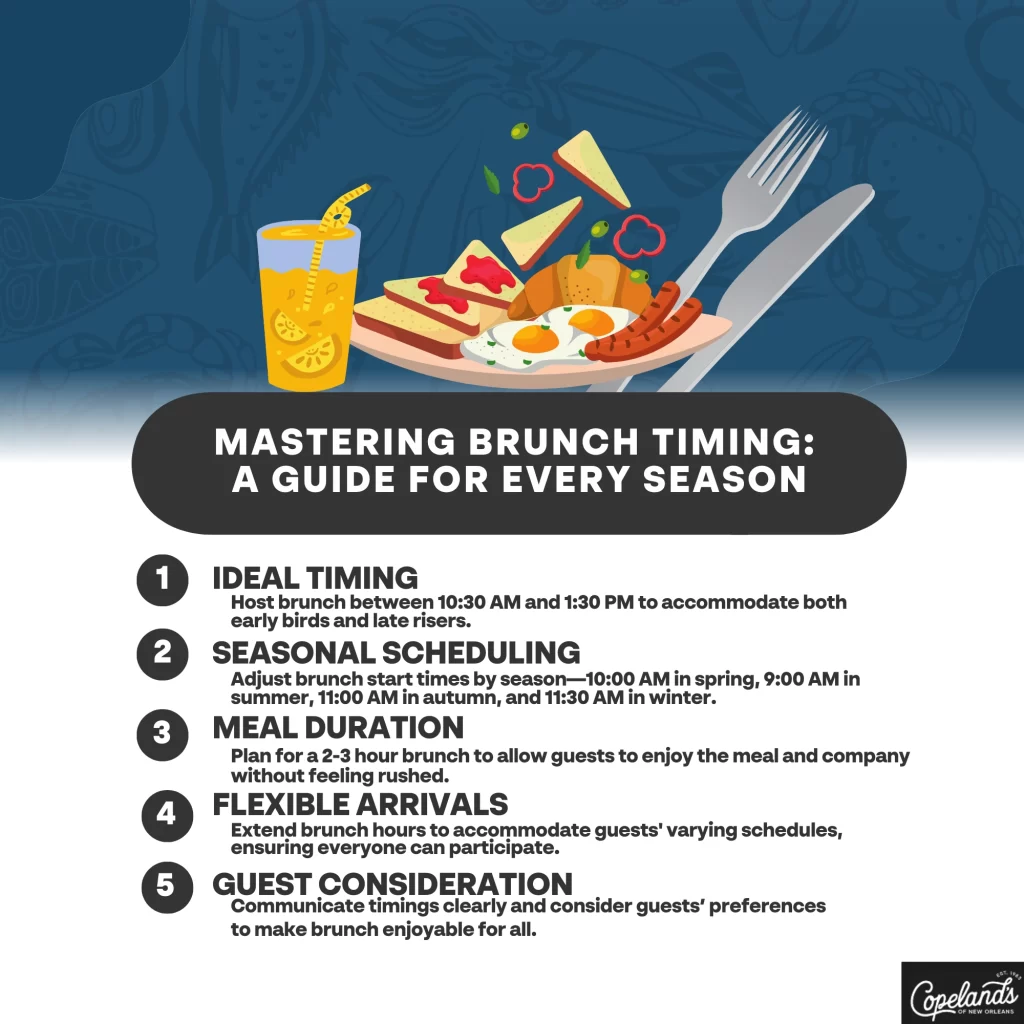
- Start brunch around 11:00 AM to comfortably serve both early risers and night owls.
- Plan a 2–3 hour duration for a relaxed, unhurried experience.
- Adjust start time by season:
- Spring: 10:00 AM
- Summer: 9:00 AM
- Autumn: 11:00 AM
- Winter: 11:30 AM
- Allow flexible arrival times so guests can come and go within a broader window.
- Communicate timing clearly so everyone can plan their day around your brunch.
Tip 1 – Consider Your Guests’ Schedules
When planning the perfect Sunday brunch, it’s essential to think about your guests’ schedules so the timing works for as many people as possible.
Some will be up early with kids or commitments, while others may be coming off a late Saturday night and prefer a slower start.
Reach out in advance if you can—via text, group chat, or a quick poll—to get a sense of what works best. You’ll likely find a general overlap in the late morning that keeps everyone comfortable.
Don’t forget family obligations, nap schedules, or church services. A brunch that feels thoughtful and considerate of real-life routines will always be more enjoyable and better attended.
Tip 2 – Choose the Optimal Brunch Window
The ideal brunch window usually lands between 10:30 AM and 1:30 PM. This span gives you sweet-spot flexibility:
- Late enough that it’s clearly not breakfast
- Early enough that it doesn’t interfere with afternoon plans
- Perfect for serving both breakfast and lunch-style dishes
Starting around 11:00 AM is a great anchor time. Guests can have a slow morning, and those who wake early don’t feel like the day is wasted before food appears.
It also keeps your gathering squarely in “brunch” territory instead of turning into a late lunch.
If you’re hosting at a restaurant or planning a brunch in Jacksonville style outing with friends, check how long their brunch service runs and choose a start time that gives everyone a comfortable arrival window.
Tip 3 – Make Seasonal Time Adjustments
Adapting your brunch timing to the season makes the whole experience feel more natural and comfortable. Think about daylight, temperature, and how people tend to use their weekends in different months.
- Spring – 10:00 AM
Mild mornings and fresh air make a slightly earlier brunch appealing. Guests can enjoy the rest of the day afterward. - Summer – 9:00 AM
Beat the heat by starting earlier. This is especially helpful if you’re serving food outdoors or on a patio. - Autumn – 11:00 AM
Cooler temperatures and cozy vibes pair well with a later, more relaxed start time. - Winter – 11:30 AM
Shorter days and chilly mornings make a late-morning brunch feel extra inviting and warm.
These seasonal tweaks help your brunch feel in tune with the weather and the time of year instead of fighting against it.
Tip 4 – Set the Ideal Meal Duration
Once you’ve picked your start time, decide how long brunch should last. A duration of 2 to 3 hours is usually perfect:
- Around 2 hours works well for a structured gathering with a set menu, toasts, or a clear start and end.
- Up to 3 hours gives guests more freedom—time for seconds, conversation, and those who arrive a bit later.
Anything shorter can feel rushed; anything significantly longer can leave people feeling tired or unsure when it’s okay to leave. Aim for that “just right” window where guests can eat, chat, and relax without watching the clock.
Tip 5 – Balance Early Birds and Night Owls
Every group has both: the friend who’s up at 6 AM and the one who sees brunch as their first meal of the day—at noon. The key is to design your timing and flow to welcome both.
Here’s how to balance them gracefully:
- Offer a broad arrival window within your 2–3 hour span.
- Serve food in stages—light bites early (fruit, pastries, coffee), followed by main dishes a bit later.
- Keep seating flexible, so people can move, mingle, or sit as they arrive.
- Communicate clearly on the invite: “Food served from 11–1; drop in any time!”
This structure ensures early birds feel rewarded for arriving on time, while late sleepers still get a full brunch experience.
Frequently Asked Questions
What is the best time for a brunch event?
Traditionally, brunch is served from approximately 10:00 AM to 2:00 PM. This window strikes the perfect balance between breakfast and lunch, giving guests the freedom to arrive a bit earlier or later while still enjoying the full spread.
It also allows you to serve a mix of dishes—pancakes, eggs, salads, and light lunch options—without anything feeling out of place. Within that range, choosing a specific start time around 10:30–11:30 AM works beautifully for most groups and settings.
Conclusion
You’ve now got the core timing secrets that turn a simple Sunday meal into a truly memorable brunch.
When you consider your guests’ schedules, choose a flexible late-morning window, adjust for the season, set a sensible duration, and welcome both early birds and night owls, your brunch feels almost effortlessly “just right.”
The magic isn’t complicated—it’s thoughtful timing. Use these five tips as your guide, and your next Sunday brunch will feel so natural and well-paced that guests will be wondering how you made it look so easy.


