
Creativity in cooking is more than just following a recipe—it’s about imagination, exploration, and the willingness to try something new. Whether you’re experimenting with your favorite ingredients or trying out a completely different cuisine, cooking offers endless opportunities to express yourself. The kitchen becomes a place where ideas grow, flavors mix, and traditions evolve into something uniquely your own.
Restaurants like Copeland’s Jacksonville showcase this kind of creativity every day. Their balance of Southern comfort, Cajun influences, and vibrant flavors demonstrates how thoughtful technique and bold imagination can transform familiar dishes into memorable experiences.
If you want to bring more creativity into your own kitchen, here are five ways to get inspired and discover new approaches that make cooking more exciting, flavorful, and personal.
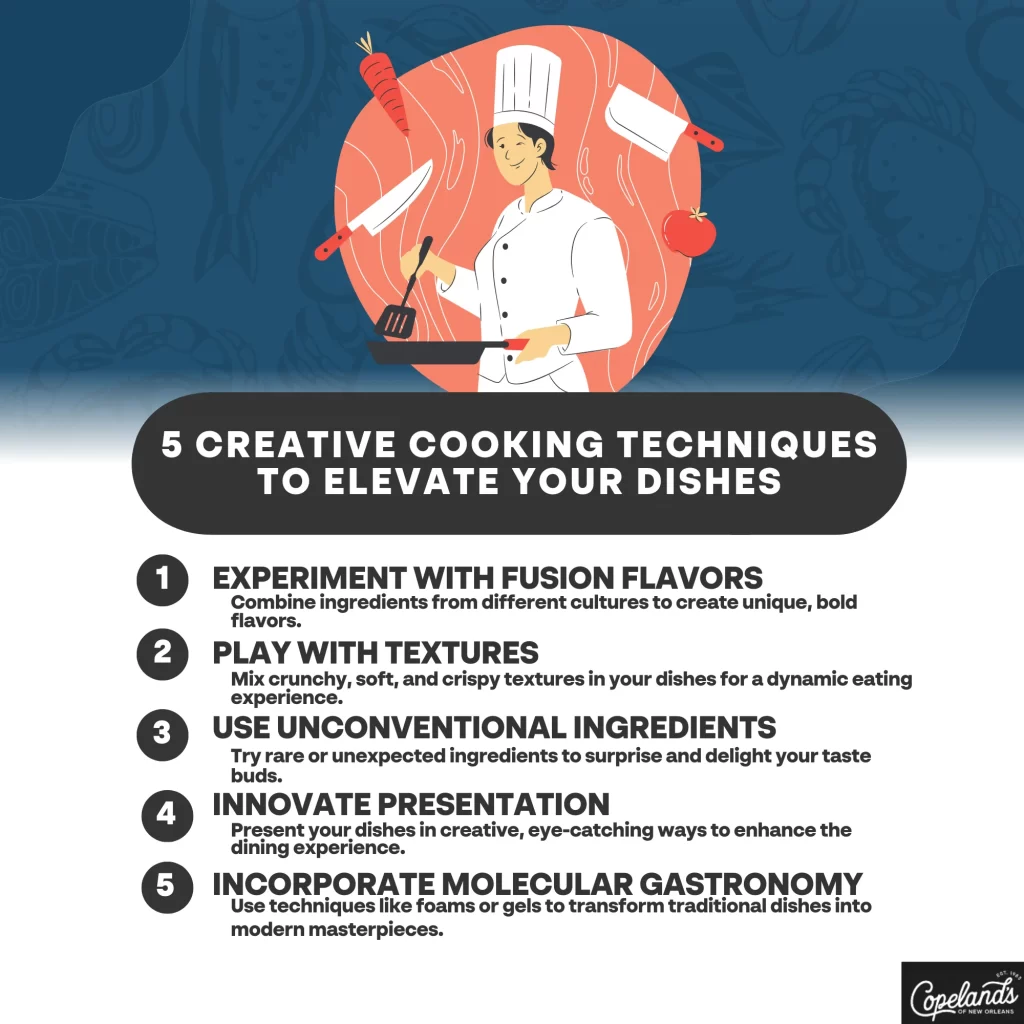
Experiment with Fusion Flavors
Fusion cooking blends ingredients, techniques, and traditions from different cultures to create something entirely new. It’s one of the most creative ways to reimagine classic dishes and introduce unexpected combinations that surprise the palate.
Fusion works well because it encourages curiosity. For example, you might take a traditional Southern dish and add global influences—like Cajun spices in a pasta dish or Asian-inspired marinades on grilled meats. You can mix Mediterranean herbs with classic American comfort food, or give Latin flavors a fresh twist by pairing them with unexpected textures.
Successful fusion cooking isn’t about combining flavors at random—it’s about understanding which elements complement each other. Acidity balances richness, sweetness softens spice, and bold seasonings enhance mild ingredients. Once you understand these relationships, you’ll find it easier to experiment confidently.
Even simple dishes take on new life when you introduce diversity in seasoning, technique, or presentation. Fusion invites you to play with your food and break the rules in a way that still honors the original flavors.
Play with Textures
Texture is one of the most overlooked aspects of cooking, yet it plays a major role in how enjoyable a dish feels. By experimenting with texture, you can transform familiar ingredients into entirely new experiences.
Think about the contrast between crisp and creamy, smooth and crunchy, airy and dense:
• Add toasted nuts to salads or pastas for extra crunch.
• Pair silky sauces with grilled or seared proteins.
• Use breadcrumbs, tempura batter, or fried onions to add rich, crispy elements.
• Experiment with purées or whipped components for softer contrasts.
Texture doesn’t just enhance flavor—it adds excitement. A dish with multiple textures feels layered and thoughtful, even if the ingredients are simple.
Professional chefs rely heavily on texture to elevate their plates. Crisp garnishes, foams, reductions, and crushed spices all add dimension. At home, experimenting with temperature also enhances texture—a hot, crispy element paired with something cold and refreshing creates instant contrast.
The article on Copeland’s weekend brunch highlights how dishes come to life when textures balance each other, making every bite interesting and satisfying.
Use Unconventional Ingredients
Creativity often appears when you step outside your comfort zone. Unconventional ingredients offer new flavors, aromas, and textures that inspire fresh ideas. This doesn’t mean using obscure items—it simply means exploring beyond your usual routine.
Some ways to do this include:
• Trying produce you haven’t cooked with before
• Swapping your usual herbs or spices for something new
• Using seasonal or locally grown ingredients
• Incorporating specialty items from different cuisines
• Exploring global pantry staples such as miso, curry pastes, or smoked salts
Even adding a single new ingredient can change your perspective. For example, smoked paprika introduces warmth without heat, while ginger adds spice and brightness. Unique grains like farro, quinoa, or couscous offer alternatives to traditional rice or potatoes.
Unconventional ingredients also encourage discovery. The more you explore, the more you understand how flavors interact—and the more confident you become in your own creativity.
A great place to find inspiration is the Menu, where Cajun cooking meets Southern comfort in ways that celebrate both tradition and innovation.
Innovate Presentation
Presentation is often the first thing people notice about a dish. Even before the first bite, the way food looks sets the stage for the experience. That’s why presentation is one of the most powerful ways to show creativity in cooking.
It doesn’t require complicated techniques to plate food beautifully. Start with simple ideas:
• Add fresh herbs for color and fragrance.
• Use clean, modern plating lines rather than overcrowding the dish.
• Play with height by stacking or layering ingredients.
• Use plates that complement the dish’s colors and textures.
• Place sauces thoughtfully—drizzled, dotted, or brushed.
Visual appeal makes food taste better because the brain connects beauty with flavor. A thoughtfully arranged plate can elevate even a simple meal.
Restaurants in thriving culinary cities like Jacksonville, FL pay close attention to presentation, not just for aesthetics but because it helps guests experience flavor more intentionally.
Don’t be afraid to experiment. Try different shapes, colors, and arrangements until you find a style that expresses your personality in the kitchen.
People Also Ask: How to get more creative with cooking?
Start small. Try new spices, switch up cooking methods, explore global flavors, and experiment with presentation. Creativity grows naturally when you stay curious and open to trying new ideas.
Incorporate Molecular Gastronomy
Molecular gastronomy sounds complex, but at its core, it’s about understanding how ingredients behave and using science to transform them in exciting ways. While some techniques require advanced tools, many basic ideas are accessible for home cooks.
Common molecular gastronomy techniques include:
• Foams that concentrate flavor in airy, delicate forms
• Spherification that turns liquids into flavorful pearls
• Dehydration to intensify flavor and alter texture
• Gelification to create shapes and structures with liquids
• Sous vide cooking for precise temperature control
These techniques open the door to playful creativity. Imagine turning fruit juice into pearls that burst with flavor, creating herb-infused foams that top savory dishes, or using ultra-smooth purées to redefine texture.
While not every meal calls for molecular techniques, they provide new ways to think about food. They’re tools that help you experiment, challenge yourself, and elevate dishes beyond traditional boundaries.
Conclusion
Creativity in cooking comes from curiosity, experimentation, and the courage to try something different. Whether you’re blending global flavors, embracing new textures, using unconventional ingredients, improving presentation, or exploring molecular gastronomy, each step brings you closer to expressing your own style in the kitchen.
Cooking becomes more than nourishment—it becomes a joyful craft. And when you see creativity brought to life at places like Copeland’s Jacksonville, it’s easy to feel inspired to bring that same spirit into your own home.


