

Family reunions are some of the most memorable gatherings we experience. They bring generations together, create opportunities to reconnect, and celebrate the traditions that make every family unique.
While these events can be deeply meaningful, the planning process often feels overwhelming. Coordinating schedules, selecting a venue, preparing food, and ensuring everyone feels included can quickly become challenging without the right approach.
The good news is that hosting a stress-free family reunion is entirely possible when you plan intentionally and keep things simple. Whether you’re organizing an intimate gathering or a large cross-country reunion, the following tips will help you create a celebration everyone can enjoy—yourself included. Many families also choose to make the day even easier by exploring private dining Jacksonville options when they want their event handled with care.
Below, you’ll find five practical strategies to help your family reunion come together smoothly, along with a People Also Ask question commonly searched by hosts planning events of all sizes.
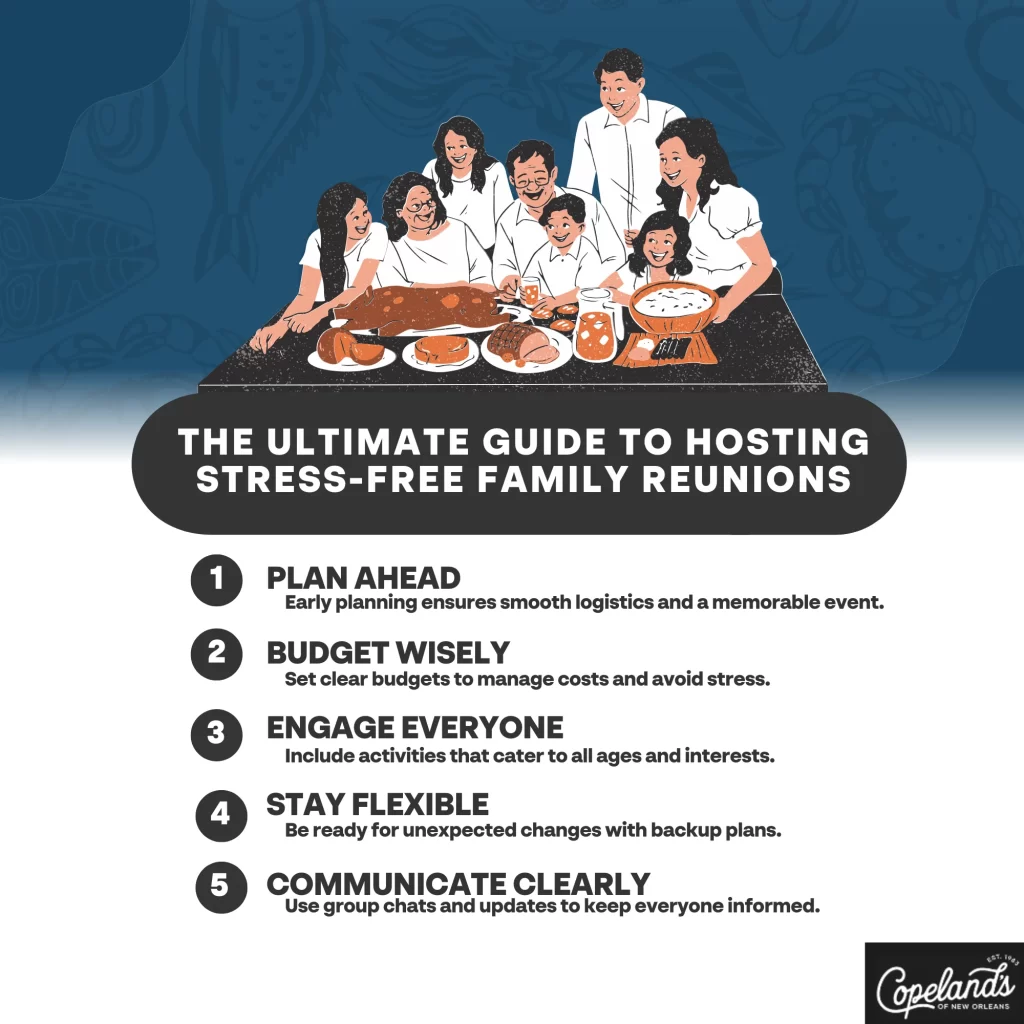
Plan Ahead
Planning early is one of the biggest contributors to a successful family reunion. The more time you give yourself, the easier it becomes to secure a venue, choose dates, send invitations, and organize your activities. Many families begin planning six months to a year in advance, especially when coordinating travel.
Creating a clear planning timeline makes everything feel more manageable. Start by identifying the essentials:
• When will the reunion take place?
• Where will everyone gather?
• How many guests are expected?
• What type of activities or meals will you include?
Once these basics are outlined, you can focus on the more detailed planning. Early organization also allows far-away relatives to request time off work, book travel, and budget for the event.
To gather menu ideas or meal inspiration, browsing the Menu can help you explore options that work well for groups.
Start the planning process far in advance
Planning a family reunion can feel like piecing together a giant puzzle, but starting the process far in advance makes it manageable. Begin by creating a family reunion checklist to guarantee you cover all essential details. First, choose a date that works for the majority of your family. Next, decide on a venue that accommodates everyone comfortably—whether it’s a park, community center, or someone’s backyard.
Once the date and location are set, reach out to family members for their input. This not only helps you gauge interest but also builds excitement around the event. Consider organizing activities that cater to different age groups, like games for kids and relaxation spots for adults.
Don’t forget about logistics! Think about food, seating, and entertainment. Will you hire a caterer or do a potluck? List the supplies you’ll need and assign tasks to family members to lighten your load.
Finally, keep communication open. Send out save-the-dates and updates frequently to keep everyone informed. By starting early and staying organized, you’ll pave the way for a memorable family reunion that everyone will cherish!
People Also Ask: What is the first step in planning a family reunion?
The first step is choosing a date and location. These two factors shape the rest of the planning process and allow family members to confirm availability early.
Budget Wisely
Budgeting is a fundamental part of planning a stress-free reunion. Establishing a budget early on helps you make clear decisions about food, venue, activities, and supplies. It also ensures transparency among family members who may be contributing financially.
A helpful approach is to divide your budget into categories:
• Venue or gathering space
• Food and beverages
• Decorations and supplies
• Activities or entertainment
• Accommodations or transportation (if needed)
Once you outline these categories, estimate costs and adjust as needed. If your family reunion includes many attendees, consider implementing low-cost or shared contributions. For example, some families host potlucks, divide meal responsibilities, or select cost-effective group dining options.
You can also simplify your budget by hosting your reunion at a restaurant or event space. In many cases, group dining or brunch celebrations—like the one highlighted in Copeland’s weekend brunch—can provide a delicious, stress-free solution with predictable pricing.
Engage Everyone
A memorable family reunion encourages participation from all age groups. Whether you have toddlers, teens, adults, or seniors attending, planning activities that appeal to everyone ensures that no one feels left out.
Start by considering the interests and abilities of your guests. Some enjoyable ideas include:
• Friendly competitions like cornhole or trivia
• Memory-sharing activities such as photo boards or family storytelling
• Craft stations for younger attendees
• Casual group games that allow everyone to mingle
• A shared family recipe tasting or potluck
Encouraging involvement doesn’t have to be complicated. Even assigning simple roles—such as setting up, overseeing games, or helping with photos—makes attendees feel included and connected.
Another helpful approach is to invite family members to contribute ideas beforehand. This not only builds excitement but ensures everyone’s preferences are considered, which leads to better participation on the day of the event.
Stay Flexible
While planning is essential, flexibility is equally important. Family reunions involve many moving parts, and it’s common for schedules to shift, weather to change, or activities to take longer than expected. When you expect minor surprises, it becomes easier to adapt with ease.
A flexible mindset helps keep the mood light and enjoyable. If an outdoor activity gets rained out, having a backup indoor plan ensures the fun doesn’t stop. If younger family members get restless, having simple games or crafts ready can make a big difference.
It’s also helpful to avoid overloading the schedule. Family reunions often unfold naturally, as people catch up, share stories, and move between activities at their own pace. Build in plenty of free time so guests can relax and spend time with the people they came to see.
Many families choose to gather in vibrant cities like Jacksonville, FL, where flexibility is easy thanks to the range of indoor and outdoor options available.
Communicate Clearly
Clear communication helps ensure everything runs smoothly. Once you’ve finalized the date, location, and general plan, share this information with your family early and often. Group emails, private social media pages, and shared documents are all helpful tools for staying organized.
If your event includes travel plans, group meals, or scheduled activities, create a simple timeline and distribute it to attendees. This keeps everyone on the same page and minimizes confusion on the day of the reunion.
Communication also helps you gather accurate headcounts, which is essential for budgeting, dining, and activity planning. The more transparent you are about expectations—whether financial contributions, assigned roles, or event timing—the more smoothly things unfold.
Conclusion
Hosting a stress-free family reunion is possible with thoughtful planning, open communication, and a flexible, welcoming mindset. When you plan ahead, set a clear budget, encourage participation, and embrace the natural flow of the day, you create a celebration filled with laughter, connection, and memories that last for years.
Whether you’re hosting at home, choosing a scenic outdoor location, or exploring private dining Jacksonville options, the key is to create a space where everyone feels comfortable and included. With a bit of organization and a lot of heart, your next family reunion can be the most meaningful and stress-free one yet.


