
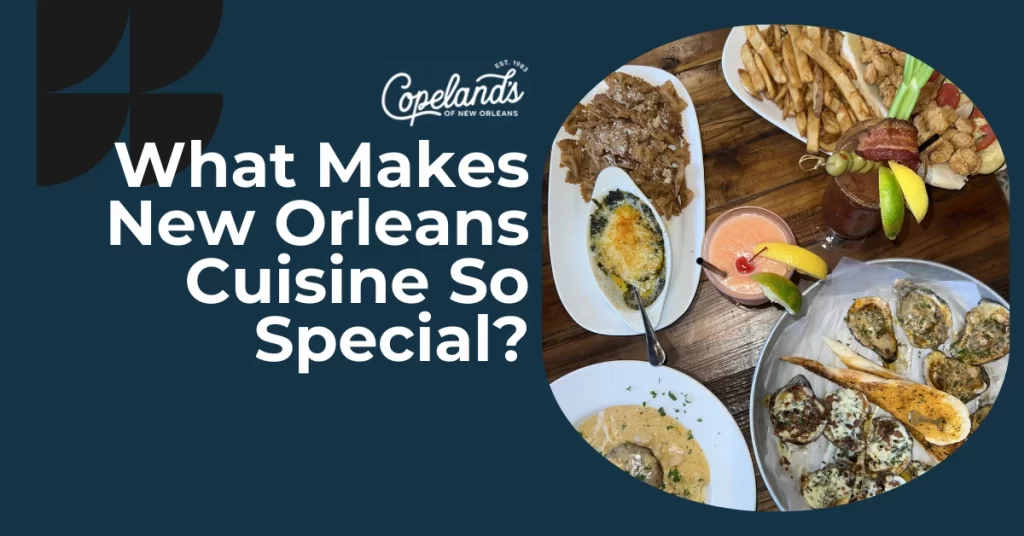
New Orleans cuisine is special because it’s a rich blend of cultures, flavors, and traditions. You’ll taste influences from French, Spanish, African, and Caribbean roots in every bite. The Holy Trinity of onions, bell peppers, and celery creates unforgettable flavors, while iconic dishes like jambalaya and gumbo showcase the city’s culinary heritage. It’s not just about food; it’s about community and connection. If you’d like to explore more about what makes this cuisine stand out, keep on.
Key Takeaways
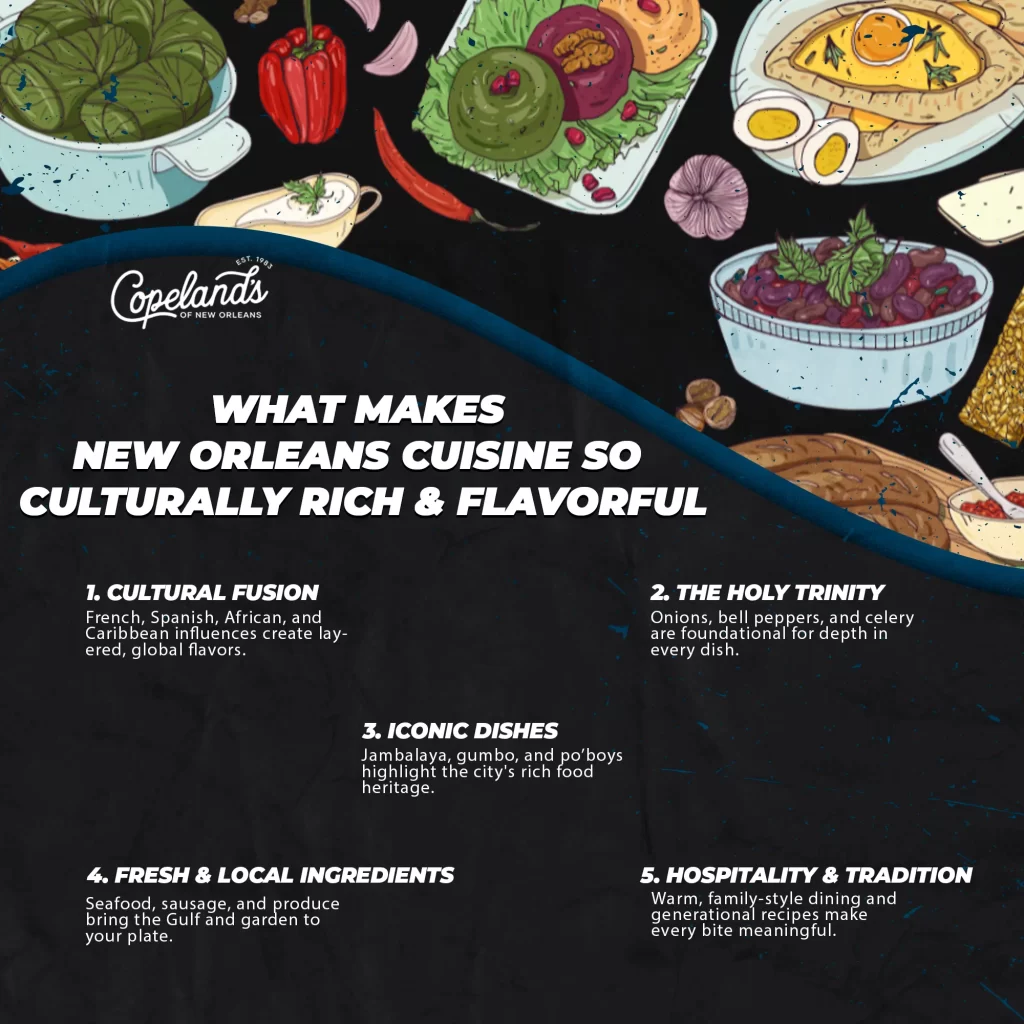
- New Orleans cuisine blends French, Spanish, African, and Caribbean influences, reflecting the city’s diverse cultural heritage.
- Signature ingredients like the Holy Trinity and spices create unforgettable flavors unique to the region.
- Iconic dishes such as jambalaya, gumbo, and po’boys highlight the culinary richness and tradition of New Orleans.
- The dining experience is warm and welcoming, fostering connection and celebration among diners.
- Community traditions and generational recipes keep culinary practices alive, reinforcing a sense of belonging and history.
The Cultural Roots of New Orleans Cuisine
When you think about New Orleans cuisine, you can’t ignore the rich blend of French, Spanish, African, and Caribbean influences that shape its unique flavors. Generational recipes and cooking traditions play a huge role in keeping these culinary practices alive. So, let’s explore how these diverse roots come together to create the vibrant dishes that define this iconic cuisine.
A Blend of French, Spanish, African, and Caribbean Influences
New Orleans cuisine is a vibrant tapestry woven from the rich threads of French, Spanish, African, and Caribbean influences, each contributing unique flavors and techniques. This blend creates a culinary experience that tantalizes the taste buds and reflects the city’s diverse heritage.
Here are three key influences on New Orleans Cuisine:
- French Influence: Think of rich sauces and techniques like sautéing and braising, essential for dishes like gumbo.
- Spanish Influence: You’ll find ingredients like chorizo and saffron in dishes, showcasing the bold flavors of Spanish cooking.
- African Influence: Ingredients such as okra and spices bring depth and soul to classic meals, creating that signature New Orleans flair.
Together, these elements make New Orleans cuisine truly one-of-a-kind.
Generational Recipes and Cooking Traditions
While exploring the culinary landscape of New Orleans, you’ll find that generational recipes and cooking traditions play an essential role in shaping its vibrant food culture. These cherished New Orleans cuisine recipes have been passed down through families, often originating from a blend of cultures that define the city. Grandmothers share their secrets during family gatherings, ensuring that each dish carries a piece of history. Whether it’s a rich gumbo simmering on the stove or a beignet dusted with powdered sugar, these recipes embody love and heritage. As you enjoy a meal in New Orleans, you’re not just tasting food; you’re savoring stories, memories, and a deep connection to the community that makes this cuisine truly special.
Signature Flavors and Ingredients
When you think of New Orleans cuisine, spices and herbs play a vital role in creating those unforgettable flavors. The Holy Trinity of onions, bell peppers, and celery is just the beginning, as fresh seafood and local produce elevate each dish. You’ll find that ingredients like sausage add depth and richness, making every bite a celebration of the region’s culinary heritage.
The Role of Spices, Herbs, and the Holy Trinity
Incorporating a symphony of spices and herbs is essential to creating the bold flavors that define New Orleans cuisine. The unique blend of these elements not only enhances dishes but also pays homage to the city’s diverse culinary heritage. When you think of New Orleans specialty food, you’ll often encounter:
- The Holy Trinity: Onions, bell peppers, and celery serve as the foundation for many dishes, adding depth and flavor.
- Cayenne Pepper: A staple for heat, it gives dishes their signature kick.
- Fresh Herbs: Parsley, thyme, and bay leaves elevate meals with aromatic freshness.
These components work together harmoniously, ensuring that every bite of New Orleans cuisine is a vibrant experience that captures the spirit of the city.
Use of Seafood, Sausage, and Local Produce
Seafood, sausage, and local produce are at the heart of New Orleans cuisine, creating a vibrant tapestry of flavors that truly embody the region’s culinary identity. When you immerse yourself in New Orleans food, you’ll quickly notice the freshness of the seafood, from shrimp to crab, which brings a taste of the Gulf right to your plate. Sausage, especially andouille, adds a spicy kick that complements many dishes like gumbo and jambalaya. Local produce, including okra and bell peppers, enhances the dishes and showcases the agricultural bounty of the region. This combination not only makes every bite delicious but also connects you to the rich cultural heritage of New Orleans, where each ingredient tells a story of community and tradition.
Iconic Dishes That Define the Cuisine
When you think of New Orleans cuisine, iconic dishes like Jambalaya, Gumbo, and Étouffée come to mind, bursting with flavor and history. You can’t forget about the classic Po’boys, comforting Red Beans and Rice, and the sweet delight of Beignets either. Each dish tells a story and showcases the vibrant culture of this unique city.
Jambalaya, Gumbo, and Étouffée
While exploring the vibrant flavors of New Orleans cuisine, you can’t overlook the iconic trio of Jambalaya, Gumbo, and Étouffée. Each of these dishes showcases a unique aspect of this rich culinary tradition, making them a true New Orleans specialty.
- Jambalaya: A hearty one-pot dish filled with rice, smoked sausage, chicken, and seafood, seasoned to perfection.
- Gumbo: A thick, flavorful stew made with a dark roux, often featuring shrimp, crab, and okra, served over rice.
- Étouffée: Typically made with shellfish, this dish is smothered in a rich sauce and served over rice, offering a comforting experience.
Together, they encapsulate the essence of New Orleans, inviting you to savor every bite of their soulful flavors.
Po’boys, Red Beans and Rice, and Beignets
After savoring the comforting flavors of Jambalaya, Gumbo, and Étouffée, you can’t miss out on other iconic dishes that define New Orleans cuisine. First up are Po’boys, a delicious sandwich stacked with crispy fried shrimp or roast beef, served on a crusty baguette. Then there’s Red Beans and Rice, a hearty dish often enjoyed on Mondays, featuring slow-cooked beans, sausage, and spices that reflect the city’s culinary heritage. Don’t forget about Beignets, those pillowy, powdered sugar-dusted pastries that make for the perfect sweet treat. Each of these dishes is a demonstration of the bold flavors and cultural influences that make New Orleans special food. Embrace these delights, and you’ll truly appreciate the essence of this vibrant cuisine.
How Copeland’s Brings New Orleans Flavor to Jacksonville
At Copeland’s of New Orleans in Jacksonville, you’ll experience authentic dishes crafted from scratch every day, bringing the true essence of Louisiana to your plate. The restaurant combines bold flavors with a warm, welcoming atmosphere that reflects the hospitality of the Crescent City. Whether you’re enjoying a casual meal or celebrating a special occasion, Copeland’s serves up a taste of New Orleans that you won’t want to miss.
Authentic Dishes Made from Scratch Daily
Copeland’s of New Orleans takes pride in crafting authentic dishes from scratch every day, ensuring that you experience the true essence of Louisiana cuisine. This dedication to freshness sets them apart from other New Orleans restaurants, making each meal a flavorful journey. Here are three standout dishes you can’t miss:
- Crawfish Étouffée – A rich, hearty dish with tender crawfish simmered in a spicy roux.
- Shrimp and Tasso Pasta – Creamy pasta tossed with succulent shrimp and spicy tasso ham for a delightful kick.
- Jazzy Wings – Crispy wings tossed in a tangy sauce, perfect for sharing or enjoying solo.
At Copeland’s, you’ll savor the bold flavors of New Orleans, crafted with care and passion daily.
A Dining Experience Rooted in Louisiana Hospitality
When you step into Copeland’s of New Orleans, you’re not just entering a restaurant; you’re immersing yourself in the warm embrace of Louisiana hospitality. Here, the essence of New Orleans cuisine shines through every dish, crafted to evoke the vibrant spirit of the Crescent City. You’ll find a welcoming atmosphere where laughter and conversation flow as freely as the rich flavors on your plate. From the savory Crawfish Étouffée to the mouthwatering Jazzy Wings, each bite transports you to the bustling streets of New Orleans. The staff’s genuine care and attention guarantee you feel right at home, making your dining experience not just a meal, but a celebration of culture and community. Come hungry; leave happy!
Frequently Asked Questions
What Role Does Music Play in New Orleans Dining Experiences?
In New Orleans dining, music enhances the atmosphere, making your meal more enjoyable. You’ll find live jazz and blues that resonate with the city’s spirit, creating a vibrant backdrop that complements the flavorful dishes you savor.
How Has New Orleans Cuisine Influenced Other Regional Cuisines?
You’ll find that New Orleans cuisine’s vibrant palette has painted flavors across the nation, inspiring regional dishes with its bold spices and fusion techniques. It’s a delicious ripple effect, transforming dining experiences everywhere you go.
Are There Vegetarian or Vegan Options in New Orleans Cuisine?
Yes, you can find vegetarian and vegan options in New Orleans cuisine. Many restaurants adapt classic dishes or create new ones using ingredients like lentils, mushrooms, and seasonal vegetables, ensuring everyone enjoys the vibrant flavors.
What Traditional Cooking Techniques Are Unique to New Orleans?
When exploring traditional cooking techniques unique to New Orleans, you’ll find methods like slow cooking, sautéing, and the famous roux preparation. These techniques create the rich, layered flavors that define the region’s beloved cuisine.
How Does the Climate Affect Ingredient Availability in New Orleans?
New Orleans’ pleasant climate enables a diverse array of seasonal produce, seafood, and spices to be available throughout the year, resulting in the city’s distinct flavors and rich culinary heritage that’s impossible to ignore.
Conclusion
To sum up, New Orleans cuisine is like a vibrant tapestry, woven from diverse cultures and rich traditions that come together to create something truly special. Each dish not only delights your taste buds but also tells a story of the city’s history and spirit. From the bold taste of spicy jambalaya to the delightful sweetness of a beignet, New Orleans’ unique flavors welcome you to experience the city’s warm hospitality and sense of community.


