
Food preparation is at the heart of every great dish, whether it’s a comforting home-cooked meal or a beautifully plated entrée at your favorite restaurant in Jacksonville. While cooking styles vary across cultures and kitchens, a handful of core techniques appear again and again—foundations that help create flavor, texture, and balance.
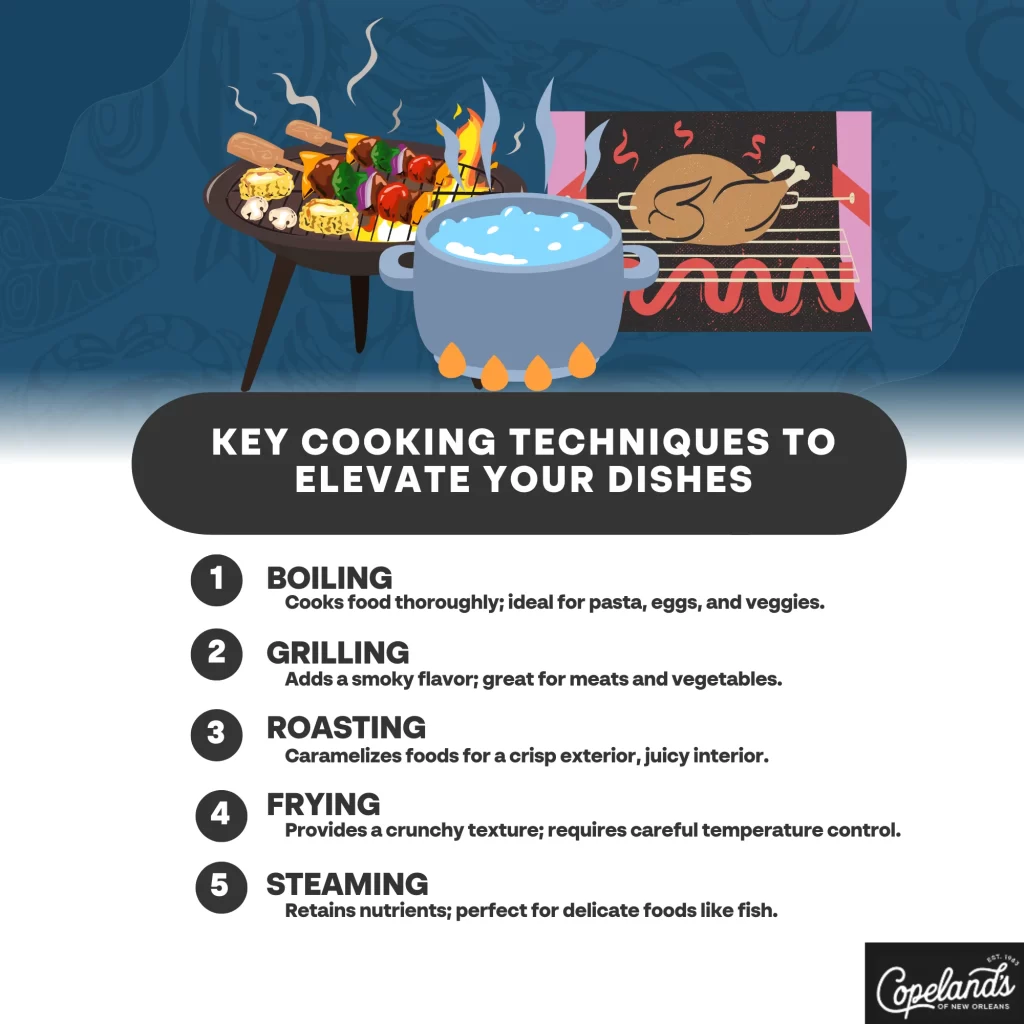
Understanding these techniques can make anyone a more confident cook. They teach us how heat changes ingredients, how seasoning brings food to life, and how the right method can elevate even the simplest ingredients. The five essential techniques explored in this guide—boiling, grilling, roasting, frying, and steaming—form the backbone of countless recipes and help cooks bring out the best in their ingredients.
Whether you’re a beginner or someone refining your culinary skills, these methods offer practical tools that make cooking easier and more enjoyable.
Boiling
Boiling is one of the oldest and simplest cooking techniques, yet it remains essential in kitchens around the world. It involves cooking ingredients in water or broth at high temperatures, typically 212°F at sea level. While straightforward, boiling plays an important role in preparing pastas, vegetables, soups, grains, and more.
The beauty of boiling is its reliability. It cooks food evenly, requires minimal equipment, and works well for both large and small batches. However, mastering boiling means learning how to control timing. Overboiling vegetables, for example, can cause them to lose color, flavor, and nutrients. Cooking pasta for too long can affect texture. Boiling meats requires attention to maintain tenderness and prevent drying.
For added flavor, many cooks salt their water or use broth instead of plain water. Broth adds depth and enhances the natural taste of the food, especially when preparing rice, potatoes, or beans.
Boiling also serves as a base for other cooking techniques. Parboiling—partially cooking an ingredient—helps prepare foods for roasting, frying, or grilling. In this way, boiling is both a standalone technique and a building block in more complex dishes.
Grilling
Grilling uses direct, high heat to cook food, giving it a smoky, charred flavor that many people love. It’s a favorite technique for meats, seafood, vegetables, and even fruits. The distinct grill marks and caramelized exterior make grilled food visually appealing as well.
Grilling requires balancing heat and timing. Too much heat can burn the outside while leaving the inside undercooked. Too little heat can cause food to dry out. Successful grilling often involves preheating the grill, monitoring flame levels, and knowing when to flip or rotate items.
Another factor is marinating. Marinades help tenderize proteins and add layers of flavor, whether smoky, spicy, sweet, or savory. A simple blend of oil, herbs, and spices can dramatically elevate grilled foods.
Grilling also encourages creativity. Beyond burgers and steaks, cooks experiment with grilled corn, peaches, shrimp skewers, and vegetables. This method’s versatility—and the unmistakable aroma that comes with it—makes grilling a beloved choice for outdoor cooking, gatherings, and celebrations.
Roasting
Roasting uses dry heat in an oven to cook food until it becomes golden, crisp, or caramelized. It’s ideal for vegetables, poultry, beef, potatoes, and root vegetables. Roasting works by allowing heat to circulate around the food, creating a tender interior and a flavorful exterior.
What makes roasting special is how it concentrates flavor. High heat caramelizes natural sugars, enhancing sweetness in vegetables like carrots, onions, and squash. A well-roasted chicken becomes juicy and aromatic, with crispy skin that adds texture.
Preparation is simple: season your ingredients, place them on a baking sheet, and let the oven do the work. Roasting also requires very little added fat, making it one of the healthier cooking methods.
Adjusting temperature can create different results. Lower temperatures cook food gently, while higher temperatures develop deep, roasted flavor quickly. Many cooks combine both approaches to achieve optimal texture.
Roasting is also one of the most hands-off cooking techniques. Once ingredients are prepared and in the oven, there’s minimal tending—making it a perfect choice for busy home cooks or large family meals.
For more inspiration on dishes that highlight Cajun and Southern flavors, the Copeland’s weekend brunch article offers a look into popular comfort dishes and bold flavor combinations.
People Also Ask: What is the healthiest method of cooking?
Steaming is often considered the healthiest technique because it cooks food without added fat and helps preserve vitamins and nutrients that are sometimes lost in boiling or frying.
Frying
Frying is all about creating a crispy, flavorful exterior while keeping the interior moist and tender. Foods are cooked in hot oil, and the method includes pan-frying, shallow frying, and deep frying. Each approach uses different amounts of oil but relies on similar principles.
The key to successful frying is temperature control. If the oil is too hot, food burns quickly. If it’s too cool, food absorbs excess oil and becomes greasy. Maintaining a steady temperature ensures crispness and even cooking.
Breading or battering ingredients adds crunch and locks in moisture. Classic fried chicken, seafood, and vegetables all rely on this combination of texture and flavor.
While frying is often considered an indulgent method, it continues to be a favorite because of the rich, satisfying results it produces. Whether preparing crispy shrimp, fried green tomatoes, or classic Southern sides, frying adds excitement and variety to meals.
Many restaurants—especially those with Cajun influence—use frying techniques to highlight signature dishes. Exploring local dining options in Jacksonville, FL often reveals menus filled with fried favorites prepared with care and expertise.
Steaming
Steaming is a gentle cooking method that uses hot vapor to prepare food without submerging it in water or oil. This technique preserves nutrients, color, and texture better than almost any other method, making it ideal for vegetables, seafood, dumplings, and delicate proteins.
Steaming cooks ingredients evenly while keeping them moist and tender. Because no fat is added, it’s one of the healthiest ways to prepare food. It also highlights the natural flavors of ingredients rather than masking them.
Many home cooks appreciate steaming because it’s simple and nearly foolproof. Once water reaches a boil, steam rises and cooks the food above it. Steamers, baskets, and even some ovens make this technique accessible for everyday meals.
Steaming also pairs well with other methods. For example, vegetables can be steamed lightly before roasting or sautéing. Seafood can be steamed with herbs or aromatics to infuse flavor without overwhelming the natural taste.
Conclusion
These five essential cooking techniques—boiling, grilling, roasting, frying, and steaming—form the backbone of everyday food preparation. Each method offers unique advantages, from the deep flavor of roasting to the crisp texture of frying or the health benefits of steaming. Understanding how these techniques work helps home cooks prepare meals with confidence and creativity.
Whether you’re perfecting your kitchen skills or exploring new dishes at a favorite restaurant in Jacksonville, these foundational techniques make food preparation both approachable and enjoyable. With practice and experimentation, each method can open the door to delicious meals that showcase flavors at their best.
If you want help writing a meta description or crafting post captions for this blog, I can prepare those next!


