
Modern cooking has transformed dramatically over the last few decades. What began as experimental science in high-end restaurants has become a widely embraced approach to food preparation, allowing chefs and home cooks alike to explore new textures, temperatures, and presentations. These techniques bring creativity into everyday cooking and help elevate familiar dishes into entirely new experiences.
Whether you’re dining at a favorite restaurant in Jacksonville or experimenting in your own kitchen, understanding these modern food techniques gives you a deeper appreciation for the innovation happening throughout the culinary world. While traditional methods like grilling and roasting remain essential, today’s chefs often combine them with advanced processes to unlock flavors and textures that weren’t possible before.
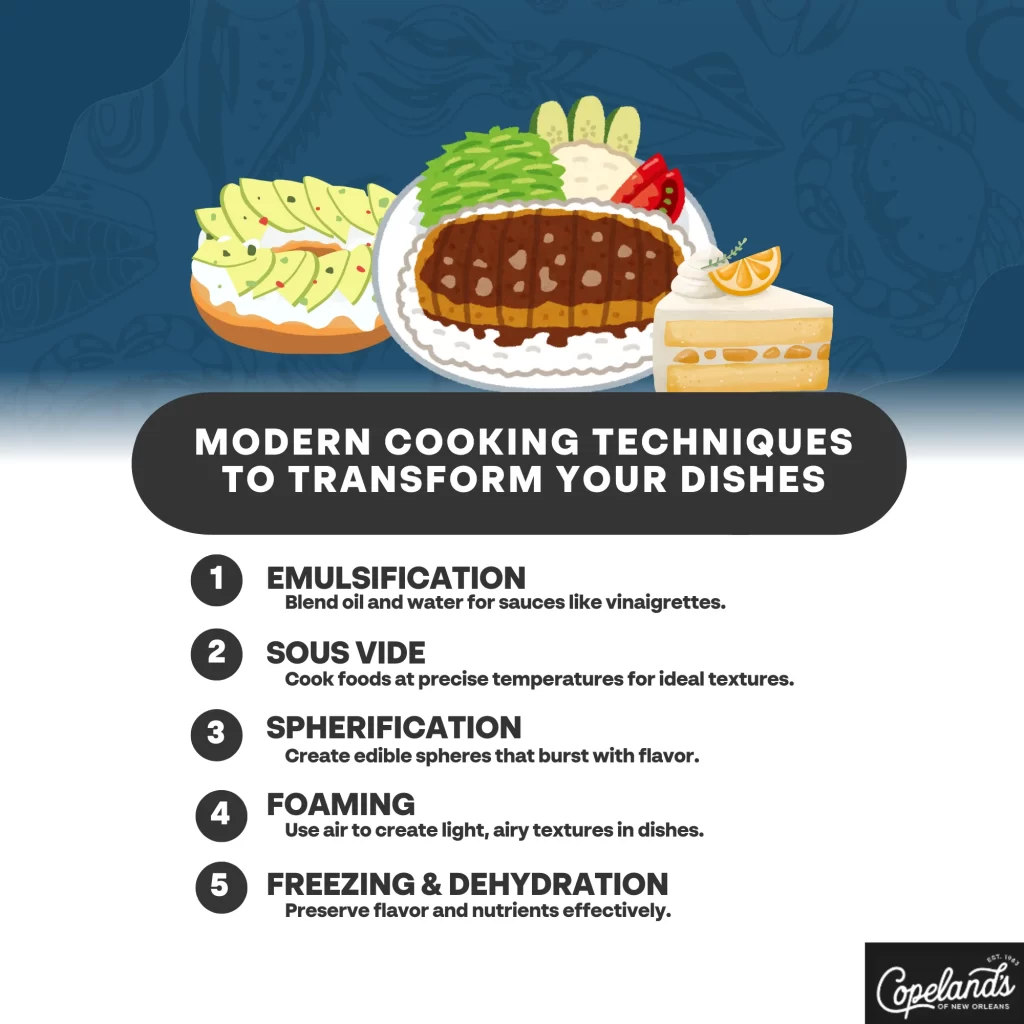
Below, we explore five of the most influential modern techniques—emulsification, sous vide, spherification, foaming, and freezing or dehydration. These methods highlight how creativity and science intersect in today’s kitchens.
Emulsification
Emulsification is the process of blending two ingredients that don’t naturally mix, such as oil and water. This technique is behind many common culinary essentials, including mayonnaise, hollandaise, vinaigrettes, aioli, and creamy sauces used on everything from vegetables to seafood.
Modern emulsification relies on stabilizers and precise mixing to create smooth, stable blends. Chefs use tools like immersion blenders, food processors, and even commercial emulsifiers to achieve consistency and refinement.
What makes emulsification exciting today is how chefs apply it creatively. Instead of simple sauces, you might find emulsified herb oils, flavored mayonnaise bases, or emulsions infused with citrus, spices, or roasted garlic. These sauces can transform a dish by adding depth, moisture, and visual appeal.
Good emulsions depend on three things: proper technique, gradual addition of ingredients, and constant blending. When handled correctly, emulsification elevates both simple and complex dishes and enhances the dining experience.
To see how emulsified sauces and dressings appear in Cajun-inspired dishes, exploring the Menu can give you a sense of how restaurants use these techniques to complement bold flavors.
Sous Vide
Sous vide, meaning “under vacuum,” has become one of the most popular modern cooking methods. It involves sealing ingredients in airtight bags and cooking them slowly in a temperature-controlled water bath. This precise technique ensures food cooks evenly and maintains exceptional tenderness and moisture.
Chefs rely on sous vide for proteins like steak, chicken, fish, and pork because it eliminates the risk of overcooking. The food cooks at exactly the desired internal temperature, guaranteeing consistency from edge to center. After cooking sous vide, ingredients are often finished with a quick sear or seasoning boost for color and flavor.
Beyond proteins, sous vide is used for vegetables, eggs, grains, and even desserts. Because the method preserves nutrients and enhances texture, it has become a favorite in both home kitchens and fine-dining restaurants.
Sous vide also supports creativity. By infusing herbs, spices, or aromatics into the vacuum-sealed pouch, chefs introduce complex flavors that penetrate food more deeply than traditional marinating methods.
Spherification
Spherification is one of the most visually striking modern techniques. Developed within the realm of molecular gastronomy, it transforms liquids into delicate, gel-like spheres that burst when eaten. These spheres resemble caviar but can contain anything from fruit juices to cocktail blends to flavored broths.
The process works by mixing sodium alginate with a flavored liquid, then dropping it into a calcium bath. The reaction forms a thin gel membrane around the liquid, creating a sphere that holds its shape until it’s bitten into.
Spherification allows chefs to present flavors in surprising ways. Instead of serving a sauce in its traditional form, they can place small spheres on a dish that release an intense burst of flavor. This method adds elegance, excitement, and modern flair to appetizers, desserts, and cocktail garnishes.
What makes spherification appealing is the combination of art and chemistry. It introduces playful elements to dining while expanding the possibilities of how flavor is experienced.
Foaming
Foaming—or creating culinary foams—became a hallmark of modern cuisine thanks to chefs who explored how air could transform flavor delivery. These foams are made by whipping or aerating liquids using tools like siphons, immersion blenders, or stabilizing agents.
Unlike whipped cream, which uses fat for stability, modern foams often rely on ingredients such as lecithin or gelatin to create airy, delicate textures. The goal is to amplify flavor without adding heaviness.
Foams can be savory or sweet. Chefs use them to top seafood dishes, enhance soups, or accompany desserts with flavors like vanilla, chocolate, citrus, or herbs. Because foams evaporate quickly on the tongue, they allow flavors to bloom instantly, offering a unique tasting experience.
This technique shows how modern cooking often focuses on refining texture alongside taste, turning familiar ingredients into something unexpected.
For a look at how Southern-inspired dishes balance traditional flavor with modern execution, the related piece on Copeland’s weekend brunch offers insight into how creativity and comfort coexist in restaurant kitchens.
Freezing & Dehydration
Freezing and dehydration are not new, but modern versions of these techniques allow chefs to manipulate temperature and moisture in innovative ways. Both methods help transform ingredients, intensify flavors, or alter textures.
Flash-freezing or ultra-cold freezing helps preserve freshness while creating new textures. For example, frozen fruit can be shaved into icy flakes, herbs can be preserved for later use, and desserts can be molded into intricate shapes. Liquid nitrogen, a dramatic modern tool, freezes foods instantly and creates exciting effects when used tableside.
Dehydration removes moisture to concentrate flavor and create crisp textures. Modern dehydrators are precise and versatile, allowing chefs to create dried fruit snacks, vegetable chips, crispy herbs, and even powdered sauces.
Combining both techniques creates opportunities for contrast—crispy elements paired with creamy components, or frozen garnishes that melt slowly into a warm dish. These temperature contrasts add sophistication and excitement to plating.
Restaurants in vibrant dining cities like Jacksonville, FL, often showcase dishes that take advantage of these modern processes to highlight bold flavors and memorable textures.
People Also Ask: What is the most common modern cooking technique?
Sous vide is one of the most common modern techniques because it ensures consistent results, enhances tenderness, and is accessible for both home cooks and professional chefs.
Conclusion
Modern food techniques like emulsification, sous vide, spherification, foaming, and freezing or dehydration have reshaped the culinary landscape. These methods expand what’s possible in the kitchen, helping chefs create dishes that are visually striking, texturally interesting, and full of concentrated flavor.
While traditional cooking methods remain essential, today’s innovative techniques open the door to endless creativity. Whether you’re exploring new flavors at a restaurant in Jacksonville or experimenting at home, these modern approaches help transform simple ingredients into memorable experiences.


